
Hylite Group is a conglomerate of seven units across Mumbai and Pune focussing essentially on surface coating. From Zinc to Chromium, Nickel, Copper to speciality coatings to PVD, the group covers almost all possible surface protection coatings for metals. With wide range of applications from large projects to precision parts, Hylite group meets exacting requirements of customers across the domestic and international markets. Starting small in Mumbai, Hylite Group, founded in 1943, has built a solid and enduring legacy of over the last eight decades.
We talk to Murtuza Bootwala, Director, Hylite Group and member of Group Board on the business journey and opportunities ahead.
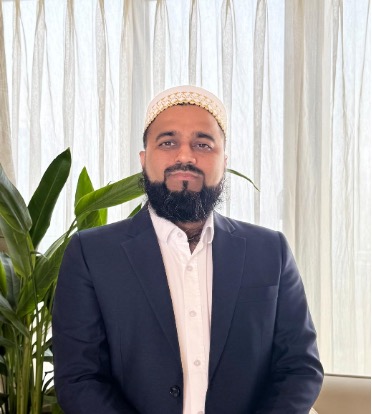
AIRA: You are a legatee of a strong group. How does that help in business?
Murtuza Bootwala: A strong group benefits the business in many ways. One is the financial strength to be able to take on risks. Secondly, when you are part of a group, new angles emerge on how to address challenges or a new business opportunity that is being evaluated. On a lighter note, individual whims and fancies have no place and everyone submits to the larger group strategy and vision. Also, mistakes are not hidden and surface openly. On a different level, everyone is accountable to the family and hence do their best. Financially, it is easy to find capital for worthwhile projects. Each person has his competence and the group gets to leverage that. So, in many ways being part of a strong group has immense advantages.
AIRA: Many family members have a hands-on role in the group activities. What do you think are the advantages and disadvantages of such an approach?
Murtuza Bootwala: The basic value of the family is selflessness. Everyone is aligned to the group culture. Obviously, this has some inherent advantages – one can build success gradually and there is no pressure like in a corporate. Each person has enough room to find his/ her niche. Every person – elder or younger thinks for the other person as there is no competition or one-upmanship. The way we have structured the group, each member has a distinct unit assigned so there is clear accountability. The most important advantage of course is the leverage we have on individual strengths. We recognize that different family members bring different capabilities – someone is technical, someone is a great people manager while another is good with financials and someone is a great customer relationship person. So, group benefits as a whole. Nobody has a hidden agenda and hence comes to the table with complete transparency. Everyone is willing to contribute, lend their shoulder without constraints and apprehension. Further, the responsibilities get assigned based on competence and not age. It is common to find an older family member ‘reporting’ to younger since he is considered an expert in that business or function.
Disadvantages – since this is a family, there is laxity. People can afford to come as they please and go as they need to. One person or unit’s problem is everyone’s problems and gets disproportionate attention. The compensation for individual members is normalized so, some may not get paid commensurate to their contribution but more based on their shareholding. And I must confess – holidays are never that! Some issue will ensure that you always have a working holiday!
AIRA: There is a Group Board that meets regularly. What is its role in the management of the business?
Murtuza Bootwala: Every Friday, the group meets informally to review any issues and discuss solutions. Once a quarter, guided by a consultant and mentor specializing in family business, we meet to discuss performance against targets and way forward for the year. We also meet once a year to review next year and five-year goals and align our resources and plans accordingly. So, while we are a family, in these meetings, we all come with our professional hats and discuss in a professional and formal setting and look behind and ahead. We have institutionalized this arrangement and it adds immense value to our operations and strategy.
AIRA: The surface coating business is highly location and logistics dependent. How do you manage sales growth?
Murtuza Bootwala: We are deeply aware of this. Hence, we have created multiple units across all strategic locations. Not just that, we have also created appropriate infrastructure to cater to the varied needs of our customers across all coating options. So, in and around the area we operate, we almost are a one-stop solution in our area of expertise. This ensures customers get the best service under one group.
AIRA: The business is subjected to commodity prices. How do you manage profitability in a volatile environment?
Murtuza Bootwala: Over the years, senior members of the family have developed deep expertise in the commodity cycle and price movements. So, in a way, there is an intuitive understanding of how the commodity is likely to behave over a time period. Further, given our large requirement, we are able to buy bulk and use the leverage to lock in prices with our suppliers on long term contracts. It is not possible to pass on the cost to the customers every time, but we do manage to communicate the need to cover our costs most of the time due to our long-standing relationships with them. At a group level, we closely monitor overall weighted average costs and the price realization to manage volatility.
AIRA: What is the impact of AI on the coating industry. How is it likely to affect your business?
Murtuza Bootwala: We are heavily investing in AI. We have accumulated substantial data and are looking to harness them through AI. We are pushing towards predictive analytics through a few tools that we have installed. We are investing to ensure that the next generation of the family can leverage this for managing the business better.
AIRA: What is the next milestone for the group? How are you preparing the team for that?
Murtuza Bootwala: Over the next five to eight years, we are aiming at a turnover of 1000 Cr. We are planning to do this by transitioning from a pure service business to products business where we are part of a ‘total solution’. We are also diversifying into different product lines beyond surface coating like architectural products to capture a wider market segment. Another broad strategy is to explore international markets by establishing presence in other countries beginning with GCC.
AIRA: Making the business attractive for Gen Z is a challenge many SME owners struggle with. You have been able to get the next generation participate actively in the so-called ‘old economy’ business. What’s the secret?
Murtuza Bootwala: We acknowledge that the next gen has different capabilities and educational experiences than ours. Most businesses try to pull the next gen into their current business and usually have a hard time. So, we have a counter intuitive approach to enrolling the next Gen. We actively invest in their current capabilities and help them scale the business. One member of our next generation has competencies in software and AI while another has studied architecture and is passionate about it. We are providing them the base and the capital to create businesses in their chosen areas. That way the next gen is committed while we diversify into new revenue streams.
AIRA: What is the one policy change you would advocate to ensure a favourable environment for SMEs?
Murtuza Bootwala: I genuinely believe that there is a lack of trust on SMEs. There is a general feeling that they are high risk for capital. There is a need for change of mindset from extracting to supporting. There must be greater support for SMEs to scale.
AIRA: What would be your advice to other SME owners that are looking to scale the business?
Murtuza Bootwala: SME owners need to ‘break the ceiling’! Business needs a fresh look every five years and the barriers need to be broken for scale. They need to expand their horizon – travel, network. The growth is not just revenue and profits. There must be a growth in learning, knowledge and outlook. And most importantly SME owners need to learn to let go.
306, 3rd Floor KP Aurum, Marol, Andheri East, Mumbai, Maharashtra - 400059
