
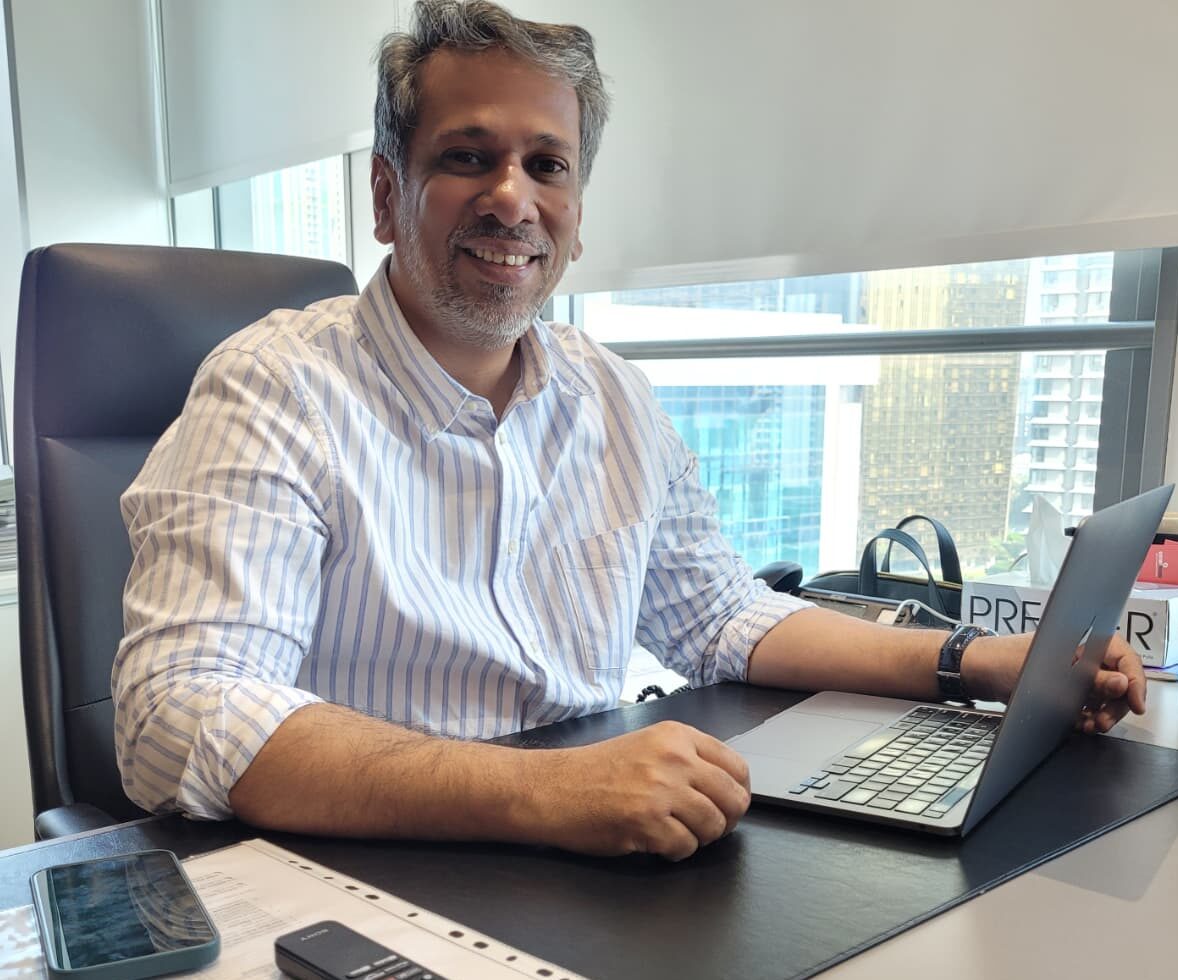
AIRA: What are the core values around which you have built this business?
Mufaddal Pankhawala: Our foundation rests on quality, service, communication, and ethics. These four pillars define how we work with our customers, partners, employees, and the wider community. For us, quality is non-negotiable, service is about building trust through consistency, communication ensures transparency, and ethics is the compass that guides every business decision. Together, these values create a culture that is resilient, reliable, and respected.
AIRA: You took significant risk by investing in world class machinery at Asian Prelam when others did not. What was the thinking when you did it?
Mufaddal Pankhawala: Yes, we invested in a German set-up with Wemhöner, and the second Wemhöner in India arrived only ten years after ours! The reason was very clear; we wanted to announce that a revolution was coming in the quality of engineered wood panels. Around that time, panels were largely seen as a low-quality substitute. Our bold investment was a statement that Indian customers deserved world-class products, and we were determined to change perceptions by setting new benchmarks.
AIRA: You have emphasized on sustainability by moving to E1 grade boards when the Indian industry is still contemplating. Why?
Mufaddal Pankhawala: We have always believed in offering products that we ourselves would be proud to use. E1 grade signifies low formaldehyde emission, which directly impacts the quality of air we breathe every single day. Since furniture surrounds us in our homes and workplaces, the raw material used in its production has a deep and lasting impact on human health. It was my wife Fatema who first drew attention to this issue. She was deeply moved by the health implications of formaldehyde emissions, and her conviction helped us take a quick and firm decision to adopt E1 standards.
AIRA: You are building a brand – “LAMÀNI”, in a largely undifferentiated category. What’s the idea?
Mufaddal Pankhawala: LAMÀNI was the brainchild of my son, Husain. Our earlier brand, Asian Prelam, while established, was too generic and limiting for our global aspirations. With exports already accounting for 25% of our sales, we needed a brand identity that was distinctive, premium, and internationally appealing. LAMÀNI represents our ambition to go global and stand apart in a category crowded with undifferentiated players.
AIRA: Many SMEs do not scale because the next generation is unwilling to join an ‘old fashioned’ manufacturing business. How do you ensure your next generation joins and thrives?
Mufaddal Pankhawala: The younger generation often sees manufacturing as outdated. What I did differently was to trust their vision without compromising our core values. Instead of forcing them to follow the traditional model, I encouraged them to innovate, experiment, and think differently. This approach transformed the dynamic. Instead of teaching them, I now find myself learning from them—about how the new generation thinks, works, and creates. By handing them leadership early while guiding them only where necessary, we created a collaborative model where fresh ideas thrive without losing the wisdom of experience. It’s a balance that has worked wonders for us.
AIRA: Looking ahead, what is your next milestone and how are you preparing the organization for that?
Mufaddal Pankhawala: Our aspiration is to expand our international footprint and reach global markets. We intend our brand to be known for its product quality and higher service standards. This will allow us to capture greater value, strengthen our brand globally, and bring Indian engineering and design closer to international consumers.
AIRA: What is the one policy change you would advocate to ensure a favourable environment for SMEs?
Mufaddal Pankhawala: When we hire highly qualified, well-educated, and experienced professionals, the biggest mistake SMEs make is to try and teach them. We should empower them instead. At a policy level, I would advocate for initiatives that support SMEs in adopting cutting-edge technology and attracting professional talent, while giving them the freedom to innovate without unnecessary regulatory hurdles.
AIRA: What would be your advice to other SME owners that are looking to scale their business?
Mufaddal Pankhawala: Two things:
– Trust technology and the younger generation. They may bring in unfamiliar ways of working, but that is often where growth lies.
– Never compromise on quality. The journey can be painful, slow, and expensive at times, but in the end, it is always worth it. A reputation for quality is the strongest competitive advantage you can ever build.
306, 3rd Floor KP Aurum, Marol, Andheri East, Mumbai, Maharashtra - 400059
