
Kohli Printing and Converting Machines Pvt. Ltd. is a leading manufacturer of printing and converting machines like Roto Gravure, Laminators for the packaging industry. Kaku Kohli, the current Managing Director, is a third-generation entrepreneur who has revolutionized the business by adopting latest technology that meet exacting requirements of customers worldwide. Today Kohli is considered a serious competitor to European machines and is ranked among the top three manufacturers in the world.
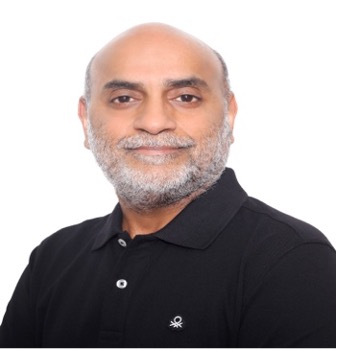
AIRA: The business has over Five decades of history. What is the core value of the organization, that has stood the test of time?
Kaku Kohli: Five decades is a long time, but over these years our core values haven’t changed much. In fact, they’ve only become stronger.
For us at Kohli, it has always been about a clear vision, a deep trust and faith in our team, a commitment to customer service, and ethics that don’t bend with time.
These four things have quietly carried us through these five decades.
Our machines keep evolving, technologies keep changing, but our key four values have kept us steady, relevant, and respected.
AIRA: What are the challenges you have faced while scaling the business?
Kaku Kohli: Scaling a business always sounds exciting, but the real challenges are usually very practical.
For us the main challenge is not about finance itself – but getting easy access to finance at competitive interest rates when you actually need it.
Add to that the general lack of structured support for SMEs, absence of a proper single-window system while dealing with authorities and even trying to do simple tasks can become surprisingly time and energy consuming.
But one has to stay focused, stay consistent, and keep moving forward – that’s how growth really happens.
AIRA: You have constantly pushed the envelope on technology. How do you gear the team to the new technology?
Kaku Kohli: Earlier, technology in our industry used to change every 5 to 8 years. Today it changes every few months. So the only way to stay ahead is to stay curious and stay exposed.
We keep the team aligned with new technology through a mix of constant learning and real-world exposure – attending international exhibitions, interacting with global companies, and staying close to our peers and vendors.
Asia has always looked up to European standards, and our customers expect us to match (or exceed) that, so staying updated isn’t optional for us.
My involvement with the European Rotogravure Association, now called Global Rotogravure Association has also helped a lot. Their seminars, discussions and technical exchanges give us a clear view of where the world is headed.
Internally, we make sure the team travels, attends industry shows, participates in training sessions, and picks up topics they genuinely want to grow in.
Once the team is continuously learning, adapting to new technology becomes a normal rhythm of work.
AIRA: What are the three metrics that you monitor on an ongoing basis to keep the pulse on the business?
Kaku Kohli: For me, monitoring on the below three metrics are very important:
1. OTIF (on-time-in-full) – because if you can deliver reliably, everything else becomes easier.
2. Cashflow – the most important metric for any SME. It tells you the real health of the company, not the balance sheet.
3. Enquiry-to-order conversion – it shows whether the market is responding to what we are offering.
These three numbers give a very honest picture of where the business stands on any given day.
AIRA: Many SMEs do not scale because the next generation is unwilling to join an ‘old fashioned’ manufacturing business? What do you do to ensure your next generation joins the business? How do you prepare them for a meaningful role in the business?
Kaku Kohli: I’m the third generation in a business started by my grandfather. So I’ve seen how every generation looks at the world differently. The truth is, you can never take it for granted that the next generation will join. All you can do is create interest, never force interest.
What we can do, as business owners, is make the organisation relevant, transparent and future-ready.
When a company is modern, ethical, progressive, and professionally run, it naturally becomes more attractive for any next generation to consider.
At the end of the day, they should choose the business because they see purpose and potential in it – not because of pressure.
Our job is simply to build an organisation that they would want to be part of.
AIRA: Looking ahead, what is your next milestone and how are you preparing the organization for that?
Kaku Kohli: Looking ahead, our next milestone is simple: scale with stability and take the company to the next level without losing our DNA.
For SME’s, growing to the next orbit is not always easy – the ecosystem and support systems don’t always move at the same speed as your vision. But instead of getting stuck or slowing down, I believe in staying open to strategic partnerships.
When the right partners come in, they bring fresh strengths, new capabilities and a bigger platform to scale – and growth becomes a shared journey, not a solo struggle.
Preparing the organisation for this, is all about being transparent, process-driven, and future-ready, so that when opportunities come, we can absorb them smoothly and grow infinitely together.
AIRA: What is the one policy change you would advocate to ensure a favourable environment for SMEs?
Kaku Kohli: I wish there was just only one policy to change 🙂
SMEs face many structural challenges – but the most critical one right now is the 45 day payment rule for SME vendors.
The intention was very good, but in reality it puts one SME under huge pressure to pay another SME, which is not always practical.
Cashflow cycles vary from industry to industry, and a one-size-fits-all timeline can create avoidable stress.
A more flexible, sector-wise approach or a framework that supports timely payments without forcing unrealistic timelines would make life much easier for SMEs and strengthen the entire ecosystem.
Policies work best when they understand how businesses actually operate on the ground.
AIRA: What would be your advice to other SME owners that are looking to scale the business?
Kaku Kohli: My advice to SME owners is simple: don’t close the door on new possibilities.
Many family businesses get held back by sentiment or the fear of “outsiders.” But sometimes, the right strategic partner can take you to places you may not reach alone.
Choose carefully, of course – but stay open. openness is what converts potential into scale.
And if you find a partner who strengthens your vision and respects your values. Then scaling stops feeling like a challenge and starts feeling like a natural next step.
At the end of the day, scale happens when you stop saying “never” and start saying “why not?”
306, 3rd Floor KP Aurum, Marol, Andheri East, Mumbai, Maharashtra - 400059
