
Tastel Fine Food is a player in the strategically important food processing industry. With a range of Ready to Eat (RTE) and Ready to Cook (RTC) products, Tastel is defining new standards in instant foods. With supplies to discerning customers across the world, Tastel has carved a name for itself in the industry. A state-of-the-art plant in Karad, Maharashtra and new facilities in other locations, investments in certifications and people — Tastel is poised to scale significantly in the years to come.
We talk to Ajay Kumar Talwar, Founder and Managing Director, on the business journey and the opportunities ahead.
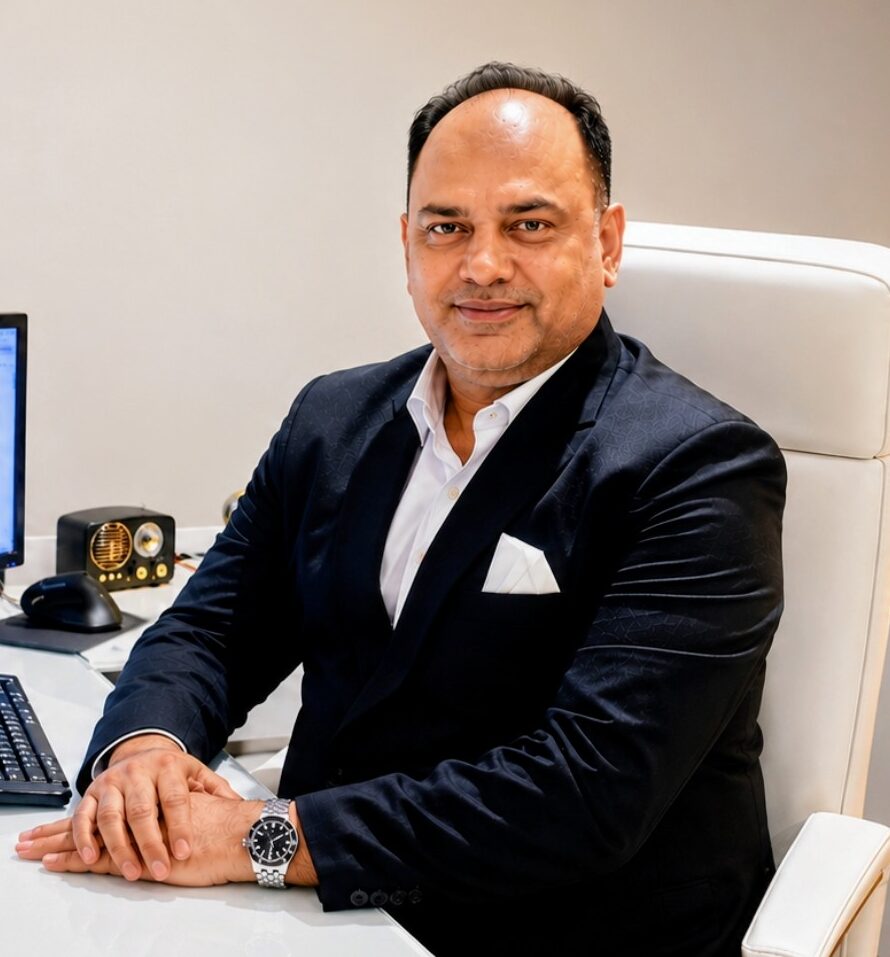
AIRA: You are a first-generation entrepreneur. How has the journey been?
Ajay Talwar: The journey has been one of the most demanding and rewarding experiences of my life — and I would not trade it for anything.
I came into entrepreneurship with a solid professional foundation. Ten years as a cook and chef gave me mastery of food from the ground up. The subsequent eleven years in the food processing industry, where I grew from Works Manager to Innovation Head, GM Sales, and finally VP Operations and Marketing, gave me something equally valuable — a 360-degree understanding of how a business actually functions. Work ethics, discipline, and above all, the right attitude and vision. Those years were my real business school.
When I finally took the leap, I did so with a clear conviction: there were significant gaps in the international market. Authentic, value-added food products from India were simply not available at the quality and design standard the world deserved. That belief was my only capital, because financially, I had almost nothing. Just INR 20,000 in the bank, no family business background, no financial backing, and one employee — an office assistant — to start building what I hoped would become an organisation.
The early years were actually interesting and energising. When you have nothing to lose, the only direction is forward. Risk-taking came naturally, because every risk was really just another attempt to build something. But building a core team, establishing credibility, and sustaining momentum as a first-generation entrepreneur with no safety net — that tested every ounce of resolve I had.
The honest truth is that self-introspection became a daily discipline. Every crisis, every setback, every failure demanded an honest internal reckoning — not self-pity, but clear-eyed analysis. I developed a habit of sitting quietly for hours, asking myself: what should this company look like in three years? Visualising the future, consistently and concretely, became the compass that kept me oriented when the present was difficult.
There were many heartbreaks along the way. But the rule I set for myself was simple — the next morning, you start fresh. You cannot allow failures to override your vision. What Tastel is today is not coincidence. It is the accumulated result of focused innovation, relentless learning and unlearning, and the refusal to let any single setback define the destination. Brick by brick, step by step — that is how you build something that lasts.
AIRA: You started your career as a chef. What made you transition to manufacturing?
Ajay Talwar:
The transition was, in many ways, a natural evolution — though it did not feel that way at the time.
When I joined the Taj Group at seventeen, I was thrown into the deep end of professional cooking. Everything was made from scratch. There were no shortcuts, no ready-use masalas, no convenience pastes — just raw ingredients, technique, and the relentless pursuit of the right flavour. That discipline of building food from the ground up gave me something that would later prove invaluable: a genuine, intuitive understanding of taste, texture, and authenticity.
When I moved into food processing in 1992, India was an extremely nascent market for food innovation. The industry was almost entirely confined to masalas, papads, curry powders, pickles, and chutneys — largely commodity-driven, domestically focused, with very little designed product thinking. Nobody was asking the more interesting question: how do we take complex, traditional Indian food preparations and make them accessible, consistent, and scalable without losing their soul?
That question fascinated me. My culinary background gave me the confidence to attempt an answer. I saw a clear opportunity to deskill the kitchen — not to make food cheaper or simpler, but to give professional chefs and home cooks a head start. Ready base gravies, spice blends, pastes, frozen snacks — solutions that preserved authenticity while dramatically reducing preparation time and dependency on specialist skill.
The international dimension became equally compelling. Most Indian food products being designed for export at the time were conceived from the UK — essentially ‘British Indian food,’ much like we have Indo-Chinese food in India. It was Indian cuisine reimagined through a foreign lens, not authentic Indian food designed by people who truly understood what it was supposed to taste like. My years at the Taj, working with international guests and global ingredients, gave me the flavour expertise and the cultural confidence to go the other way — to take genuinely authentic Indian and global cuisines directly to the world’s shelves, on our own terms.
The chef became a manufacturer because the kitchen showed him what was missing — and the factory became the tool to fill that gap at scale.
AIRA: Food Processing is a highly regulated business. How do you build systems and processes to ensure safety and consistency?
Ajay Talwar: Food regulation is not a single standard — it is a complex, constantly evolving matrix of country-specific requirements, each designed around local produce, ingredients, processes, and consumer safety norms. What is acceptable in one market may require significant reformulation or process adjustment in another. Navigating this is not optional for a company with global ambitions — it is the price of entry.
At the foundation are the international Codex standards, which define baseline parameters across food categories and ingredients. But layered above that are the specific requirements of certification bodies and regulatory authorities — ISO, BRC, FSSAI, FSMA, GFSI, USFDA, CFIA, and others — each with their own clauses governing food safety, hygiene, raw material specifications, packaging standards, and process controls. And these are not static — they are updated regularly as new challenges emerge, tolerance levels are revised, and commercial realities shift across continents. Europe has different expectations from the US; Canada has different standards from the Middle East and Australia. As a company exporting to all of these markets simultaneously, we have had to build a very robust, audit-ready compliance architecture in-house.
This begins with people. We have a dedicated technical team focused entirely on international compliance, a quality systems team embedded within the plant to implement and monitor evolving global norms, and a structured annual training programme that includes thermal validation training, BRC certification, TQM, and more. Senior food technologists, microbiologists, and chemists form the backbone of this team, supported by a continuous pipeline of trained junior staff who serve as the next generation of quality custodians.
On the infrastructure side, we have invested in an advanced in-house laboratory with the equipment to test every single batch — chemical, microbiological, and sensory parameters. Our innovation team works through a rigorous pilot validation and full-scale production validation process, backed by state-of-the-art international processing equipment. Accelerated shelf life studies are standard practice, ensuring that every product we ship maintains its integrity, consistency, and quality from our plant to the supermarket shelf anywhere in the world.
Traceability runs through the entire chain — from raw material sourcing to finished product dispatch. Because ultimately, all of this — the certifications, the laboratories, the training programmes, the validation protocols — exists for one purpose: to guarantee that what leaves our facility is safe, authentic, and exactly what our customer expects, every single time.
AIRA: You have a significant presence in the global market — US, Europe, Gulf. What are the challenges in addressing such a wide customer profile?
Ajay Talwar: Food is one of the most complex businesses to operate globally, precisely because every market has its own distinct definition of what is safe, what is acceptable, and what is required on a label. There is no single global standard that covers everything — and managing that diversity across multiple markets simultaneously is one of our biggest ongoing challenges.
Europe is perhaps the most demanding. The EU has among the most stringent pesticide residue standards in the world — Maximum Residue Limits, or MRLs, that are far more restrictive than many other markets. For a company like ours, producing complex Ready to Cook and Ready to Eat products that use multiple ingredients in a single sauce or curry, the compliance burden is significant. Each ingredient must be individually sourced, tested, and validated for pesticide-free status — both fresh and dry. Every shipment to Europe goes through a rigorous pre-export testing protocol before it moves. There is no shortcut.
The US and Canada bring a different set of requirements. FDA and CFIA regulations govern labelling with great precision, contaminant thresholds are closely monitored, and process filing for certain product categories is mandatory to clear health and customs checks. The Middle East, on the other hand, combines competitive pricing pressure with Halal certification requirements and its own packaging and labelling regulations. Each market, essentially, is a separate compliance universe.
Beyond regulation, the logistics environment over the past five years has been extraordinarily challenging. Covid disrupted global shipping routes, freight rates became highly volatile, and cold chain reliability — already a complex variable — became even harder to manage. These are costs and risks that compress margins and demand constant operational agility.
Then there is the competitive pressure. Producing and exporting countries around the world are continuously improving their technology, lowering their costs, and aggressively targeting the same markets we serve. That pressure is real and it is not going away.
But I would be honest about what I consider our deepest structural challenge — and it is an internal one. India’s agro commodity supply chain is not yet where it needs to be. We source ingredients directly from farms and conduct our own testing, because a regulated, systematic pesticide control framework at the farm level simply does not exist at the scale required. Many pesticides that are banned globally — and indeed banned in India — are still being sprayed in the field and are being detected in ingredients when we test them. That is a serious problem, not just for Tastel, but for India’s ambitions as a commanding agro value-added export nation. We cannot claim a seat at the world’s top table until our internal compliance standards match those of competing countries — and that can only happen through Farmer Producer Organisations, better quality control systems at the farm level, and end-to-end traceability from soil to shelf.
AIRA: India’s demographic is undergoing significant shift. QSR, delivery apps, cloud kitchens are redefining how customers order and consume food. What will be the impact on food processing businesses like Tastel?
Ajay Talwar: The opportunity this shift presents for food processing is, quite simply, enormous — and Tastel is very deliberately positioning itself to capture it.
QSRs, cloud kitchens, restaurant chains, delivery platforms, and institutional caterers all share a common operational need: consistent, quality, ready-to-cook ingredients that reduce preparation time, control costs, and eliminate dependence on highly skilled kitchen labour. The more India’s food service sector grows — and it is growing at a remarkable pace — the greater the demand for reliable processed food solutions that sit behind the scenes, enabling these businesses to deliver consistently at scale. Tastel has built a significant bank of innovative products, developed and tested specifically for this market, and we are actively preparing to bring them to the Indian consumer.
But to truly understand the scale of the opportunity, you have to look at the supply side challenge that this booming sector faces. India’s agro commodity supply is still heavily dependent on rainfall and irrigation infrastructure. Prices of garlic, lentils, mangoes, and daily consumption vegetables fluctuate dramatically from season to season. A failed mango crop or an unseasonal monsoon can send input costs spiralling, destroying the margin stability that QSRs and restaurant chains depend on. Beyond pricing, we lose an estimated 20 to 25 percent of fresh produce every year to improper storage, cold chain inefficiencies, and supply chain gaps. That is an enormous and entirely preventable loss.
Food processing is the structural solution to this problem. Processed food has significantly longer shelf life. It converts seasonal, perishable abundance into year-round availability. It stabilises pricing, reduces wastage, and gives the entire food service ecosystem the consistency it needs to operate profitably. The world average for processed food as a proportion of agro output in producing countries is around 45 percent. India is at less than 20 percent. That gap is not a problem — it is an opportunity waiting to be addressed.
Tastel’s vision is to be part of closing that gap in a meaningful way. We see a future where food processing units are strategically established across key agro-producing states — particularly in areas like Odisha and the Northeast, where fresh produce wastage is high precisely because processing infrastructure is absent. Processing units within 150 kilometres of agro-produce clusters can convert seasonal surplus into long-life frozen and ambient aseptic products, dramatically reducing waste and creating year-round value. This is not just a business vision — it is a national one.
AIRA: As you look into the future, what are the new milestones that you are chasing? How are you preparing Tastel to meet them?
Ajay Talwar: I would not say we are chasing milestones — we are building towards them, deliberately and stage by stage. There is a difference. Chasing implies reaction. What we are doing is far more intentional.
The foundation of everything we are building is people. At Tastel, we run a continuous talent programme that brings in fresh graduates from management schools, engineering colleges, and food technology institutions. This generation is remarkable — digitally native, data-literate, AI-competent, and yet also street-savvy in ways that surprise you. They understand market trends intuitively and move fast. We pair them with senior mentors across every functional stream — production, quality, sales, innovation — creating a three-tier structure of senior leadership, mid-management, and management trainees that ensures knowledge transfer while injecting fresh energy into the organisation continuously.
On the technology side, we are actively integrating AI tools across process engineering, automation, HR systems, and quality assurance. The goal is operational excellence at scale — not technology for its own sake, but applied intelligence that makes our systems faster, more consistent, and more responsive.
In terms of market expansion, the next three years are clearly mapped. On the India side, we are preparing for a significant product launch in both B2B and B2C channels, with fast commerce placement and experience centres that bring the Tastel brand directly to the Indian consumer. We have already opened a new international office in the UK this year, covering both imports and exports across Europe. Looking at 2026-27, we have marked the opening of new subsidiaries in the Middle East and Australia, alongside acquisitions and manufacturing partnerships in Europe and the United States.
Each step is strategic and staged — we are not overreaching, but we are moving with clear intent and a defined timeline. Small steps, executed with precision, compounding into significant scale. That has always been the Tastel way — and it remains so as we enter what I believe will be the most exciting chapter of this company’s journey.
AIRA: Everybody is talking of AI and its impact on industry. How does AI impact food processing?
Ajay Talwar: We have touched on some of this already, but let me share my broader perspective. AI should be seen as an unqualified boon for entrepreneurs in food processing — provided it is channelled correctly. And that qualifier matters. AI is only as good as the human intelligence that directs it. I think of it as HI plus AI — Human Intelligence working in concert with Artificial Intelligence. With the right inputs, the right questions, and the right people managing the systems, the efficiency gains are significant and the time saved can be redirected toward what humans do best: creative thinking, product innovation, and relationship building.
In practical terms, the applications for food processing are compelling across the entire value chain. Big data and AI-powered analytical tools give us a far more reliable basis for understanding consumer trends, anticipating shifts in preference, and identifying future innovation platforms before they become obvious to everyone else. That early-mover intelligence is enormously valuable in a sector where product development cycles are long and market windows are short.
On the operational side, AI enhances productivity in ways that are both measurable and immediate. Better procurement planning, smarter raw material specification management, waste reduction through predictive analytics, quality system monitoring, and more accurate sales forecasting and projections — these are areas where AI-driven tools can deliver real, bottom-line impact for a food processing business of any size.
But I want to be clear about one thing: AI does not replace the need for skilled, tech-savvy people. If anything, it raises the bar. You need people who understand the systems, who can interpret the data intelligently, and who can continuously upgrade and adapt the tools as the technology evolves. AI is the engine — human intelligence remains the driver. Get that relationship right, and the results can be transformative.
AIRA: Making the business attractive for the second generation is a challenge many SMEs grapple with. You have been successful in this. What’s the secret?
Ajay Talwar: I am not sure there is a secret, really. It is more a natural course of grooming — of sharing, openly and honestly, both the challenges and the successes around the family table, long before any formal conversation about joining the business takes place.
But let me be candid about the difficulty first, because most first-generation entrepreneurs I know struggle enormously with this transition — and often fail to understand why. The second generation grew up in abundance. They did not experience the grind, the sleepless nights, the INR 20,000 in the bank and everything to prove. They come in with their own ideologies, their own goals, their own ways of thinking — often reactive, looking for immediate solutions, sometimes with views that seem completely radical or even contrary to everything you have built. That can be deeply frustrating if you approach it as a problem to be corrected.
I chose to approach it differently. The first thing I had to accept was that they are not me — and they should not be. The world they are operating in is not the world I started in. Their instincts, their digital fluency, their way of reading markets — these are genuine assets, not deviations from the right path.
What I focused on instead was injecting the non-negotiables early — the ethics, the fair business practices, the absolute commitment to customer delight. These are the foundations of Tastel that cannot be compromised, and they have to become part of the next generation’s DNA before they take the wheel, not after.
Beyond that, the most powerful tool I found was responsibility through crisis. Mentoring someone in comfortable conditions teaches them very little. Giving them ownership of a genuine challenge — and standing close enough to catch them if they fall, but far enough to let them find their own footing — that is where real growth happens. There comes a moment in every founder’s life when the growing child signals, clearly, that they are ready to take ownership. When that moment arrived, I made a conscious choice: trust their ability, let them take charge of their team, accept that they will have their own failures and their own successes, and be there as a backstop.
The transfer of responsibility at Tastel was deliberate and staged. Key areas moved across step by step — operations, business development, new product innovation, new market goals. Today, Shaurya is running these functions with his own team and his own vision. And what that has given me is something I did not fully anticipate: the freedom to step into a more strategic role — travelling, building new partnerships, exploring acquisitions, networking at a level that the day-to-day demands of running the business never allowed. Letting go, it turns out, is not a loss. It is the highest form of building.
AIRA: Food processing is a strategic priority industry as it ensures post-harvest value addition. What do we need to make it stronger and vibrant?
Ajay Talwar: Let me put one fact on the table first, because it captures the paradox perfectly. India has one of the largest agricultural bases in the world — yet our food processing exports are smaller than those of the Netherlands, a country a fraction of our size. That single statistic tells you everything about the gap between our potential and our reality. Closing that gap requires structural intervention, not incremental tinkering.
The first and most fundamental reform needed is a proper grading system at the farm level. Today, a significant proportion of fresh produce never reaches the market in usable form — not because it is unfit for consumption, but because it is the wrong size, the wrong shape, or simply surplus to immediate demand. A systematic grading infrastructure near farm clusters would allow approximately 55 percent of produce to flow efficiently to the fresh market, while the remaining 45 percent is channelled directly into food processing — converted into ambient, frozen, or chilled formats with significantly longer shelf life. This single intervention would dramatically reduce the 20 to 25 percent post-harvest wastage we currently accept as normal.
The second imperative is a dedicated government programme to support SMEs in setting up processing units precisely in the regions where this wastage is highest — areas where farmers regularly fail to sell their full produce and ungraded sizes are simply discarded. Targeted grants, land allocation, and infrastructure support in these zones would not only reduce waste but create employment, generate rural income, and build the processing capacity India needs to compete globally.
The third area — and I feel strongly about this — is pesticide regulation at the farm level. India still has carcinogenic pesticides being sprayed on crops that are banned in most markets around the world. We need a properly resourced, field-level regulatory team, drawn from agricultural universities and extension services, trained to identify prohibited pesticide use, educate farmers on safe and compliant alternatives, and enforce standards consistently. Getting this right does not just protect consumers — it unlocks enormous export opportunities that are currently closed to us because our produce fails residue testing in international markets.
India has every ingredient needed to become a world-leading food processing nation. What we need is the systemic architecture to convert that raw potential into processed, exported, and consumed value. The opportunity is generational — and the time to build that architecture is now.
AIRA: What is the one policy change you would advocate to ensure a favourable environment for SMEs?
Ajay Talwar: My advocacy would be a fundamental shift in how government support for SMEs is structured — away from subsidies and toward something far more purposeful and lasting.
Subsidies, as they are currently designed, address the symptom rather than the cause. What SMEs in food processing genuinely need is not cash support that gets absorbed into working capital — they need grants directed specifically at process systems, supply chain infrastructure, and innovation centres that build real, lasting capability. The model I would advocate is one where the government identifies strategic zones — regions with significant agro output but without the presence of large or medium food processing companies — and establishes innovation and value-addition centres in those zones. These centres would take raw material through to finished product, providing SMEs with access to processing infrastructure, quality testing, and product development support that they simply cannot afford to build independently.
The strategic logic here is powerful. SMEs, properly supported and equipped, can become dedicated suppliers to medium and large food processing companies — creating a structured, symbiotic supply chain that currently does not exist at scale in India. The large company gets a reliable, quality-assured supply base. The SME gets market access, volume, and a pathway to grow.
Alongside the physical investment, we need continuous government-led training programmes on process standards, quality systems, and international certifications — building the technical workforce that will operate these facilities and grow with them over time. India’s next 25 years of growth will be defined by whether we make these structural investments now. Without sustained, focused government intervention, I am afraid the vision of India as a world-class food processing nation will remain exactly that — a vision. The time to act is now.
AIRA: What would be your advice to other SME owners looking to scale the business?
Ajay Talwar: Everything I have learned about scaling a business can be distilled into a few principles — none of them glamorous, all of them essential.
Start with your team. Building, training, and empowering people is step one — not step five, not something you get to when you can afford it. It is the foundation everything else rests on. Give them HR policies that genuinely support their wellbeing, create facilities that make them want to stay, and most importantly, give them the opportunity to take real ownership of their area of expertise. People who feel trusted and invested in will outperform any system or process you can design. Retain your best people — the cost of losing them is always higher than the cost of keeping them.
Never compromise on quality. No shortcuts, no exceptions. Quality is not a department — it is a culture. Build in-house capabilities in process innovation, new product development, and quality systems. These are not overhead costs — they are the value that differentiates you, the platform from which scale becomes possible.
Optimise your supply chain, but do it thoughtfully. Work with fewer suppliers rather than many — and invest in those relationships. Empower your suppliers with clear quality standards and consistent engagement. A reliable, quality-assured supply base is a competitive advantage that most SMEs underestimate until they lose it.
On the commercial side, I feel very strongly about this: do not undercut on pricing to win business. It is one of the most common and most damaging mistakes SMEs make. Undercutting leads to thin margins, which leads to compromises on quality and performance, which leads to losing the very customers you discounted to acquire. Instead, demand pricing that reflects your genuine value addition and competence. Know what you are worth — and hold that position.
Do not over-promise. Deliver what is within your capability, consistently and reliably. A reputation for doing exactly what you say you will do is worth more than any marketing spend.
Finally, maintain a sturdy cash flow at all times — not just for growth, but for crisis. Every business, no matter how well-run, will face moments of unexpected pressure. The SMEs that survive and emerge stronger from those moments are the ones that had the financial discipline to keep reserves when times were good.
Scale is not an event. It is the cumulative result of doing these fundamentals exceptionally well, every single day, for a very long time. There are no shortcuts to something that lasts.
306, 3rd Floor KP Aurum, Marol, Andheri East, Mumbai, Maharashtra - 400059
