
Saksham Technologies is among the leading suppliers of equipment for R & D and healthcare segment. As a representative of cutting edge technology partners across the globe, Saksham’s products cater to a wide variety applications across education, pharma, Biotech and testing labs. With over three decades of experience, Saksham has a footprint over 10,000 installations in 250+ Cities and Towns and serves over 4000 customers across the country. A dedicated sales and service network ensures strong customer relationship.
We talk to Sameer Maheshwari, Founder & CEO, Saksham Technologies, on the business journey and opportunities ahead.
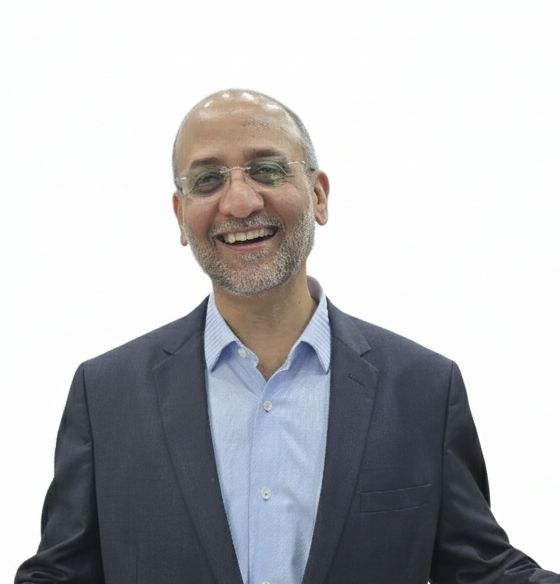
AIRA: You started the business in a highly regulated industry of healthcare. What made you take the risk?
Sameer Maheshwari: When we started the business over three decades ago, I did not look at it as a risk in the conventional sense. I had begun my career as a service engineer, so I had seen laboratories and hospitals from inside. I understood how critical was the requirement of a reliable equipment and dependable service for researchers and clinicians. What struck me then was that many good technologies were available globally, but access to them in India was limited and service support was inconsistent.
That gap stayed with me. I believed that if we could combine quality technology with honest service, we could build something meaningful. The healthcare and research sectors are demanding, but they are also purposeful industries helping human health. Knowing that our work supports scientists, doctors and researchers to achieve their objective of better human health made the journey worthwhile from the very beginning. And our Tag line evolved – Nurturing Science.
AIRA: What are some of the challenges in setting up an import-based trading business?
Sameer Maheshwari: An import-based business looks simple from the outside, but in reality it requires balancing many moving parts. Regulations, import duties, logistics, currency fluctuations and compliance requirements all play a role. In the early years, with older ways of communications, even something as simple as getting equipment cleared from customs or coordinating documentation could become a major challenge.
It is also important that one identifies an opportunity for a product / technology for India by looking at the evolving regulations in the developed world. When you bring a technology into the country, you are effectively standing behind that product. That means you must have trained engineers, spare parts availability and the ability to respond quickly if something goes wrong. Over time, we realised that success in this business is not just about importing equipment—it is about building a strong service ecosystem around it – With the sense of a responsibility towards the customer, we built a Customer centric organisation such that the customer derives value in every transaction with us.
AIRA: A business like Saksham is prone to business cycles. How do you flatten the curve to ensure steady demand?
Sameer Maheshwari: Like in any business, business cycles are inevitable in our industry. Our equipment are capital equipment. It is not recurring business. The equipment are bought and used for at least 10 years. The capital equipment purchases are the first ones to get affected in the times of uncertainties. There can be drop in demand because of lack research funding and institutional budgets. The government spending often moves in phases. The Private Industries / Hospitals capital expenditures are also subject to various business cycles in their respective industries. Over the years we have learnt that diversification is the best way to manage this. Diversification of the products and customer segments.
Instead of depending on a single segment, we built relationships across all segments in pharmaceuticals, biotechnology companies, hospitals, diagnostics, academic institutions, testing laboratories, Automobiles, Cosmetics, Food etc. Another stabilising factor is service. Once equipment is installed, customers need maintenance, calibration and upgrades. That creates a long-term relationship rather than a one-time transaction with a steady stream of revenue coming from service.
In many ways, our focus has always been on building trust rather than chasing short-term sales. When customers trust you, they come back when the next requirement arises.
AIRA: How do you create differentiation in a category like equipment when everyone pretty much offers similar functionality?
Sameer Maheshwari: In equipment businesses, differentiation rarely comes from the specification sheet alone. Many technologies today offer similar features. The real difference lies in how well you understand the customer’s application and how reliably you support them after installation.
At Saksham, we have always taken a consultative approach. Before recommending an instrument, we try to understand what the laboratory actually needs to achieve. Sometimes the right solution is not the most expensive one but the most appropriate one.
Equally important is service. When an instrument stops working in a research lab, experiments / analysis can get delayed by weeks. Being responsive and dependable in those moments builds a reputation that no brochure can replace.
AIRA: What are some of the challenges in building a sales and service business?
Sameer Maheshwari: Sales and service businesses depend heavily on people. In our case – people with scientific and engineering knowledge. Recruiting and training engineers who understand both the technology and the customer environment is not easy. It takes time for the candidates to acquire the knowledge and develop the confidence to advise appropriate solutions to customers. Also, for a service engineer to develop skills to troubleshoot equipment in a live laboratory.
Another challenge is building discipline in service processes—documentation, preventive maintenance, follow-ups and spare parts management. These may seem operational, but they are the backbone of customer satisfaction.
Over the years we have invested a lot in training our teams to offer consultative sales and effective and efficient services. Also, the team is tied to a KRA based system where customer satisfaction is at the core of the business.
AIRA: Agency led trading business is prone to the business priorities of Principals. How do you ensure Principals stay invested in your firm?
Sameer Maheshwari: Principals value partners who promote the products effectively and protect their reputation in the market. For us, that has always meant representing their technology responsibly and supporting customers well.
We focus on building long-term relationships rather than transactional arrangements. When principals see that their brand is respected, their customers are satisfied and their products are supported professionally, they naturally remain committed to the partnership.
Trust works both ways. Just as customers rely on us, principals also rely on us to represent them faithfully in the Indian market.
AIRA: Have you evaluated to move to backward integration – manufacture or assembly of equipment in India? Why?
Sameer Maheshwari: It is something we have thought about from time to time. Manufacturing requires a different kind of ecosystem—R&D capability, production capability and scale, Inventory and Quality management and global distribution channels.
Our strength historically has been in understanding technologies, selecting the right partners and supporting customers in the field. That said, the landscape in India is evolving, and initiatives encouraging local manufacturing are opening new possibilities.
If we move in that direction, it will have to make strategic sense and align with our core philosophy of delivering reliable solutions.
AIRA: Looking ahead, what is your next milestone and how are you preparing the organization for that?
Sameer Maheshwari: We are ever evolving. We are adding new products to our portfolio for the existing customer segments and also reaching out to some new segments offering our equipment. Our goal is to be present in every scientific laboratory and in every hospital in the country with some offering and contribute towards success of their plans and activities.
AIRA: Making the business attractive for the second generation is a challenge many SMEs grapple with. What’s your view?
Sameer Maheshwari: Every generation is smarter than the previous one. And Every generation must choose its own path. The next generation is well educated, confident and has many options. The technologies are evolving, so do businesses. Many businesses lose relevance over a period of time. If the next generation sees sustainable value in what has been created and feels inspired to take it forward, that is wonderful. Imposing expectations only pushes them away.
Moreover, the next generation prefers to have independent identity. And the available options offer them more or less similar monetary gains. Running the business requires to be on nimble toes. One needs to be passionate and hard working to run the business and enjoy the wins. More and more of next generation chose an easier path.
The business must be built on professional systems and capable teams so that it can evolve beyond any single individual. The strength of an organisation lies in its culture, values and processes. If this is established well, it needs a good leader / driver. The second generation, with the tools and knowledge they have, can lead / drive it well. It’s just whether they have the passion to lead / drive it through and through.
AIRA: What would be your advice to other SME owners that are looking to scale the business?
Sameer Maheshwari: Scaling a business is not only about increasing sales; it is about strengthening the foundation. Invest in people, processes and credibility. Growth built on short-term gains rarely lasts.
Be patient with relationships—whether with customers, employees or partners. In industries like ours, reputation travels faster than marketing.
And perhaps most importantly, stay curious. Technology and markets will keep evolving, and businesses that remain open to learning will always find new opportunities.
306, 3rd Floor KP Aurum, Marol, Andheri East, Mumbai, Maharashtra - 400059
