
Sang Fasteners is a significant player in the fasteners category. With over four decades of experience in the business, Sang Fasteners is a supplier to leading OEMs. Always pushing the envelope on technology, Sang has developed a wide range of products that cater to multiple industry segments. The business has seen consistent growth due to constant upgradation of manufacturing infrastructure, consistent quality and customer focus.
We talk to Abhijat Sanghvi, Managing Director Sang Fasteners, on the business journey and opportunities ahead.
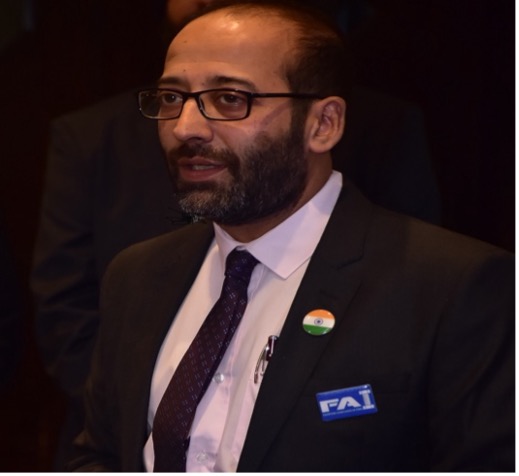
AIRA: You are a Second-generation entrepreneur who transitioned from professional career? Why did you make the switch? How has the journey been?
Abhijat Sanghvi: After completing my post-graduation, it was always part of the vision to work up the ladder in a professional corporate environment which sets up an unmatched foundation which no theoretical course or smaller run SME can prepare you for. The switch was made at the right time though the journey itself was extremely challenging especially for the first few years of the transitionary phase.
AIRA: What leadership challenges did you have face as you were handed the baton?
Abhijat Sanghvi: The positives straight up were existence of a strong value system and extremely loyalty from a very good team which immediately sets right to communicate the vision you foresee for the company. The challenges as a leader are the next big step of brand building, creating a customer centric approach & complete transparency with all stake holders – customers, suppliers, govt agencies, banks, etc. Also, the company in the early 2000s faced a recessionary phase, which did take a few years to overcome financial instability.
AIRA: What are the key elements of scale for SME? How did you go about addressing them?
Abhijat Sanghvi: The key differences we made for scaling was to have our top 5 customers across Industry segments and not focusing too much on one specific sector for e.g. Automotive which gave us the advantage of not getting affected seriously when any one end user segment faced a downside in Industry sales. So, it was either building on any of the current buyers or identifying a large end user company from a segment missing. The other critical factor was not to commit a major part of production capacity to any single customer. As much as some of the vehicle manufacturers wished to consume a big part of the capacity, limits were set up so no extreme dependence on any single customer existed. In conjunction with those buyers, gradual building of capacity was done through expansion.
AIRA: How critical is marketing in a ‘commoditized category?
Abhijat Sanghvi: In the Fastener Industry, there exists a low entry barrier which has resulted in growth to 4000+ MSME companies in the organized sector in the last two decades. Fasteners are one of the most critical parts required for most Industries yet are treated as C Class components. Marketing is important in an Industry where parts are also sold per kg with no real quality benchmarking. Our products were positioned as quality products catering to conscious End users so the competition became less severe being only the good quality manufacturers. Though I do agree that marketing is not intensely critical in a commoditized market.
AIRA: What are some of the challenges in building a manufacturing business?
Abhijat Sanghvi: The primary condition for building a manufacturing business is to have a driven motivated skilled team which is in complete alignment and execution towards the business vision. If professionally driven, the challenge is to have the right employees who are motivated adequately to implement their roles for a reasonably longer duration. This becomes a challenge in today’s context wherein the newer generations don’t carry loyalty as a priority.
AIRA: What export opportunities do you see for Indian manufacturers?
Abhijat Sanghvi: India is being recognized as a major manufacturing hub over the last many years and is poised for greater strides for the next decade given the political stability, outpacing GDP rates and the hugely favorable young demographic working segment. Also, with the EU India historic trade deal signed recently, it brings forth tremendous opportunities for Exports. India has also signed multiple Free Trade Agreements in the last five years with countries like Australia, EFTA members, the UK, Mauritius, and UAE to boost trade, investment, and market access. Indian manufacturers who are looking to identify and build international trade, need to ensure they work first on quality consciousness, cost competitiveness and adherence of timely supplies to be ready to take on the massive opportunities available.
AIRA: Looking ahead, what is your next milestone and how are you preparing the organization for that?
Abhijat Sanghvi: Our organization is primarily supplying to leading domestic OEMs such as Siemens, Godrej, Mahindra, Alstom, etc., and our next milestone is to add at least 3 more large consuming end user companies for which there will be Capex Investments over the next couple of years upgrading machinery & capacity producing quality products with a zero defect target. The objective will be to increase turnover YoY by at least 25%.
AIRA: Making the business attractive for the second generation is a challenge many SMEs grapple with. What’s your view?
Abhijat Sanghvi: Alternate career options which didn’t exist before in the arts for example have become income source proficient for those who seek to pursue their passion. Relevant career fields of before have also become more lucrative in terms of increased salaries. Disruption has created new career options too. So definitely making businesses especially manufacturing attractive for the second generation is a huge challenge. I am aware of many cases where the next generation does not take on existing SMEs or family run businesses following their own career paths. The only path I would recommend is if they do show even some level of inclination, the ideal way would be for them to spend at least one year in the business by understanding its nuances, the growth aspirations, the challenges, interface comfort with the team, etc.
AIRA: What would be your advice to other SME owners that are looking to scale the business?
Abhijat Sanghvi: Scaling business can falter if not done in an organized and professional manner. I would suggest to them first to ensure the right complete team is onboard with the vision with strategic additions if need be. Having a clear business plan for the next 5 years drawn out & also hire a professional consultancy which understands SME’s and can fine tune the business plan as well as handhold the team to make the transition in sync building a system which is geared to take on the growth. We had team AIRA consulting undertake this process which made the transition seamless through a complete professional approach with a thorough understanding of the nuances of handling the workforce making them look forward to being part of the growth.
306, 3rd Floor KP Aurum, Marol, Andheri East, Mumbai, Maharashtra - 400059
